Thursday, 4 September 2014

Task 1 - Analysis of a game genre

Analysis of a Game Genre:


RPG:

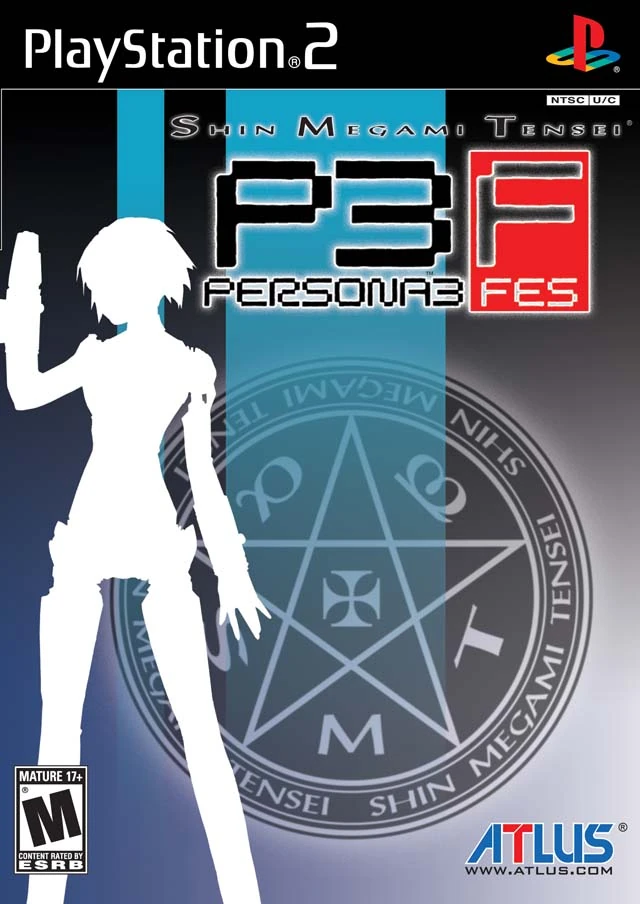
An RPG game, at least for me, is all about the story. These games are developed with the intention of, story and characters first, game-play second then everything else. The term role playing game, again at leas for me, implies that you become the character, you should get (and want to get) fully involved with this character on an emotional. A game developed like this has huge reply vale and they generally hold their retail value too (take Persona 3: FES for example, it's a 2008 ps2 game that's still to this day worth around £20-£30). These types of games have a lot of player freedom so you can choose how you spend your time and what you say and do in certain situations. The sheer amount of things on offer to do is catastrophic in comparison to any other genre. 

One other thing that is essential to any RPG game is it's soundtrack. I mean since the story is bound to be epic and huge you don't want to be stuck listening to a repetitive boring soundtrack otherwise it'd drive you insane! Obviously a game would be incomplete without any core game-play, an RPG (Or in my case JRPG(Japanese Role Playing Games)) should have a strategy based turn based combat system. The reason I prefer turn based as apposed to free moving combat (E.G. Dark Souls) is mostly because I believe it takes more skill and talent in order to become good at it and find an effective strategy. By this I mean that, when you are given a free moving combat you can more easily workout effective strategies by simply doing a dodge then a hi rinse repeat. Where as in a RPG you need to know all the enemies and what they do, grind so that you are at an appropriate level for that point in the game and train your team to similar level, not to mention the amount of understanding you need to have of the items and skills and weapons at your disposal.

Three titles that I have decided to choose for this genre are, Persona 3: FES, Catherine and Pokemon (Gen 1).

Pokemon:


I'll start of by introducing Pokemon (Gen 1). Pokemon is an RPG where the entire game revolves around you living in this fantasy world where there are these creatures called Pokemon. Each of these creatures has it's own special type along with unique moves and abilities that is only able to be used by Pokemon of that type. The story is about you wanting to become the Pokemon master so you have to travel all around the region capturing many different types of Pokemon to fill up Prof.Oaks Pokedex (A device that collects the data of every Pokemon). To become the best you have to beat every Pokemon trainer and Gym leaders (A professional Pokemon trainer) and then, the elite 4 (An advanced group of 5 (Just because) best of the best Pokemon trainers)! It has common codes and conventions typical of the RPG genre. For Example: The game features a turn based combat system and has a very story driven motive. It also features an item system which every RPG has, the fighting and sometimes just even exploring uses the item system to a full extent (just as any RPG should).


The entire game-play is you on your journey exploring jungles to towns and cities all the way down to boats and graves. Creepypasta aside the overall story for Pokemon is really good, you must defeat team rocket and stop their master plan of using Pokemon for their own gain, to get lots of money and become super rich. The layout is a simple you have 4 options:


Fight, choose what move you would like to use to attack (or not) the other Pokemon.
PkMn, this opens a list of all your Pokemon you have in your party (a collection of six Pokemon you carry around with you).
Item, you open your bag and select an item you wish to use (items steam from Pokeballs to potions and buffs).
Run, fle from the battle (you can't run from a trainer battle).

Here is a review of Pokemon Red (Gen 1):
http://uk.ign.com/games/pokemon-red-version/gb-9846

Catherine:

This game strays slightly from the typical RPG due to it also being a part of the puzzle genre. But, it does stay true to JRPG style and it's use of story telling and characters. Unlike Pokemon it has a huge devotion towards character development, you really do get to love the characters within this game. It makes you feel as if you are Vincent (the MC) and you end up spending way too much time playing just so you can help him to his goal and find out what happens next in the story.

As far as game-play goes in this game, you alternate between escaping nightmares by climbing block towers (It's more fun and challenging than it sounds) and gathering information and helping out others who are also plagued by these nightmares trying to save them by giving them a motive to go on. You can also practice and hone your skills on a simulation game inside the bar for the nightmares you will face (a game inside a game... GAME-CEPTION!), plus you receive random messages throughout the time you spend in the bar from people and depending on how you answer (as well as questions inside the nightmares) depends on what ending you get due to your sanity meter. Once you enter the bathroom, you will see a glimpse of the up coming boss battle and hear a mysterious voice calling to you about the nightmare you are going to face that night.


Persona 3:FES

Persona 3:FES is the perfect combination of what an RPG, more specifically, a JRPG. It has a perfect mixture of story and characters and an epic, turn based, battle system. It has a perfect 50/50 balance between story and character development as well as story!


The game plays like a stereotypical JRPG with the turn based combat. However, this particular system is very fast paced, but has a lot of content to wrap your head around before you master the battles. You will also find a sound track which is what you'd expect from a JRPG. A catchy, but not annoying, theme with various other tracks that come in in certain situations and story points.

Here is some game-play footage from Persona 3:FES: **May contain spoilers**







Task 2 - Applying response theories

Violence:

Violence in video games is a controversy that the media likes to use in order to make video games and gamer's look bad. There are games that do take violence a little too far e.g. manhunt 2 (which got banned from the U.K., Australia and many other countries). However, there have been researches into video games violence and real life violence: http://www.gamespot.com/articles/research-shows-no-link-between-video-game-violence/1100-6423385/


Here is a list of all banned games: http://en.wikipedia.org/wiki/List_of_banned_video_games

In my opinion violence in video games isn't a problem, just because 1/9999 people commit violence that have had experiences of playing a very violent game doesn't mean the game is to blame as the other 9998 people never committed any real life violence.

Explicit Sexual Content:


Video games and sexual content is yet another "problem" in which the media uses to bad mouth video games and gamer's. Some games do contain a lot of sexual content and this seems to draw every half witted persons opinion onto thinking that video games are bad, when the reality is. Films and music also contain a lot of sexual content but this seems to cross everyone's mind.

Games that have an extensive use of sexual content are generally created for comedic purposes. Such as: 


Abusive/inappropriate language: 

Video games have a reputation for containing abusive and inappropriate language. The prime contender for this has always been the grand theft auto series. Some people see this as problem as it is becoming easier and easier for kids under the requirement age for playing certain games are getting there hands on them and playing them. Which, in turn exposes them to explicit language. 


Addiction: 

Addiction to video games is a real thing and can be shown in extreme cases as dangerous. In can cause gamer's to get violent and aggressive when pulled away from the game or are not playing the game. It can also lead to someone spending a lot of money on a game or becoming extremely tired and in poor health.

A good example of video game addiction would the gamer who played world of warcraft: http://www.mirror.co.uk/news/real-life-stories/internet-addict-tells-how-world-2098704

Video embedding was disabled for this video so I had to link it 

I do think video game addiction is a real thing and does present some extreme problems but this is a rare occurrence, most people know when to stop playing due to boredom or the fact they are smart enough to know when to stop.

Stereotyping and Representation:

Stereotypes in video games are generally used when talking about how females are portrayed. Most people think that women in games are portrayed as sex objects and or prizes. Some games do portray women this way but on the other end of the scale female characters are shown to be hero's.

An example for how women are portrayed as sex objects or prizes would be the game Catherine. In this game whenever you meet Catherine (with a "C" because there are two Katherine's in the game) you wake up from the nightmare the next morning to find out you've had intercourse, again, and have cheated on your girlfriend.


I personally don't think that women are being portrayed as objects or prizes, I think that it's just cleaver uses of a males instinct (attraction to females) to either sell a game for it's sex appeal or to use that as a way of telling a really good story (i.e. Catherine). Lets get right down to basics. If you made a game and wanted it to sell you'd look at the market. What's selling? Games with sex appeal, you can either risk it and make something different. Or, you can make a game with sex appeal and get at least some sales guaranteed.  

Censorship:

Sometimes games take things a little too far with certain border line topics. These games become censored. For example some countries have very strict laws on video games, like Australia, and some games end up being censored so that they are allowed to be sold in that country. Here is an example of a game that become censored due to certain laws that it breaches.

Wolfenstein:
In Germany, all the Nazi propaganda was replaced with fictional propaganda and a leader, meaning Hitler was removed from the German version of the game.


When a video game becomes censored it becomes a worthless ruined product, in my opinion.  Some games have been censored so badly they're not even playable any more, like Saint's Row 2/4. In those games they removed all blood effects meaning when you shoot someone there is no blood they just fall over and die, making this really game look retarded and crap. Whenever this happens it's generally due to easily offended idiots and their retardation level (which is over 9000), which refers to limp-wristed imbeciles who think freedom of speech and creation is the devil.

Task 1 - Response Theories

Hypodermic Theory:


The "Magic Bullet" or "Hypodermic Needle Theory" of direct influence effects was not as widely accepted by scholars as many books on mass communication indicate. The magic bullet theory was not based on empirical findings from research but rather on assumptions of the time about human nature. People were assumed to be "uniformly controlled by their biologically based 'instincts' and that they react more or less uniformly to whatever 'stimuli' came along" (Lowery & De Fleur, 1995, p. 400). The "Magic Bullet" theory graphically assumes that the media's message is a bullet fired from the "media gun" into the viewer's "head" (Berger 1995). Similarly, the "Hypodermic Needle Model" uses the same idea of the "shooting" paradigm. It suggests that the media injects its messages straight into the passive audience (Croteau, Hoynes 1997). This passive audience is immediately affected by these messages. The public essentially cannot escape from the media's influence, and is therefore considered a "sitting duck" (Croteau, Hoynes 1997). Both models suggest that the public is vulnerable to the messages shot at them because of the limited communication tools and the studies of the media's effects on the masses at the time (Davis, Baron 1981). it means media explore a information in such a way that it injects in the mind of audiences as a bullets.


Inoculation Theory:


Inoculation is a theory developed to strengthen existing attitudes and beliefs and build resistance to future counterarguments. For inoculation to be successful it is critical that a threat (motivation for resistance) is imposed upon these existing ideas and refutational preemption (ability to cognitively build defenses to potential counterarguments) takes place after the inoculation. The argument that is presented through inoculation must be strong enough to initiate motivation to maintain current attitudes and beliefs, but weak enough that the receiver will refute the counterargument. Inoculation has been proven successful through many different trials and research. This article attempts to highlight all vital parts of the theory, however, there is a large amount of quality research on the theory that was not mentioned. Also, while numerous studies have tested the theory, there continues to be a need for improvement and new hypotheses.

Two Step Flow Theory:


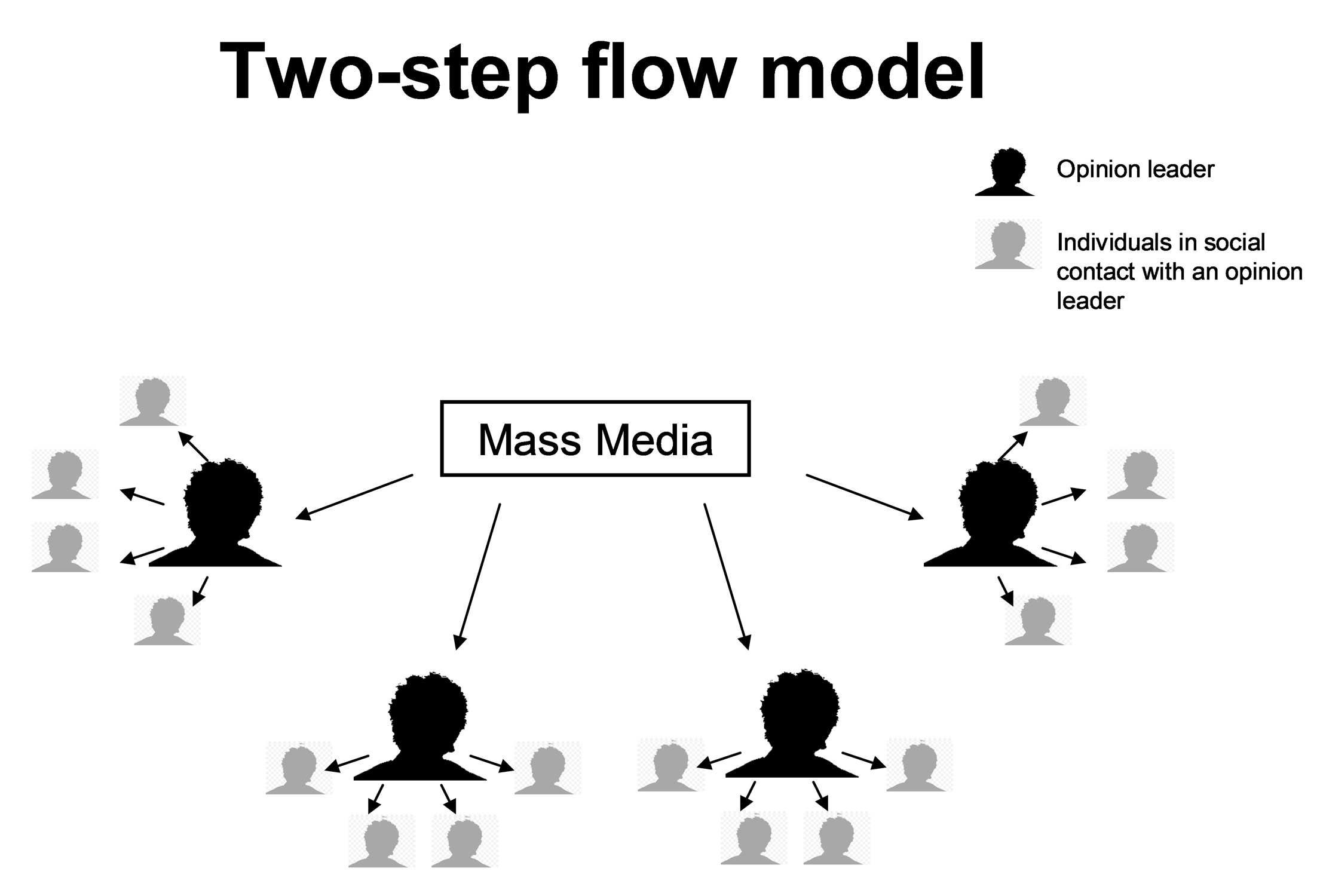
his theory asserts that information from the media moves in two distinct stages. First, individuals (opinion leaders) who pay close attention to the mass media and its messages receive the information. Opinion leaders pass on their own interpretations in addition to the actual media content. The term ‘personal influence’ was coined to refer to the process intervening between the media’s direct message and the audience’s ultimate reaction to that message. Opinion leaders are quite influential in getting people to change their attitudes and behaviors and are quite similar to those they influence. The two-step flow theory has improved our understanding of how the mass media influence decision making. The theory refined the ability to predict the influence of media messages on audience behavior, and it helped explain why certain media campaigns may have failed to alter audience attitudes an behavior. The two-step flow theory gave way to the multi-step flow theory of mass communication or diffusion of innovation theory.

The uses and Gratifications theory:


Initially, researchers approached the subject from the angle of how the media is able to manipulate audiences, injecting messages into their minds. This 'hypodermic' model, as it was later termed, became rejected after closer examination. The 'Uses and Gratifications' model represented a change in thinking, as researchers began to describe the effects of the media from the point of view of audiences. The model looks at the motives of the people who use the media, asking why we watch the television programmes that we do, why we bother to read newspapers, why we find ourselves so compelled to keep up to date with our favourite soap. The underlying idea behind the model is that people are motivated by a desire to fulfil, or gratify certain needs. So rather that asking how the media uses us, the model asks how we use the media.

Reception Theory:


A branch of modern literary studies concerned with the ways in which literary works are received by readers. The term has sometimes been used to refer to reader‐response criticism in general, but it is associated more particularly with the ‘reception‐aesthetics’ (German, Rezeptionsästhetik) outlined in 1970 by the German literary historian Hans Robert Jauss. Drawing on philosophical hermeneutics, Jauss argued that literary works are received against an existing horizon of expectations consisting of readers' current knowledge and presuppositions about literature, and that the meanings of works change as such horizons shift. Unlike most varieties of reader‐response theory, then, reception theory is interested more in historical changes affecting the reading public than in the solitary reader.

Task 1 - Construction analysis

Media text:

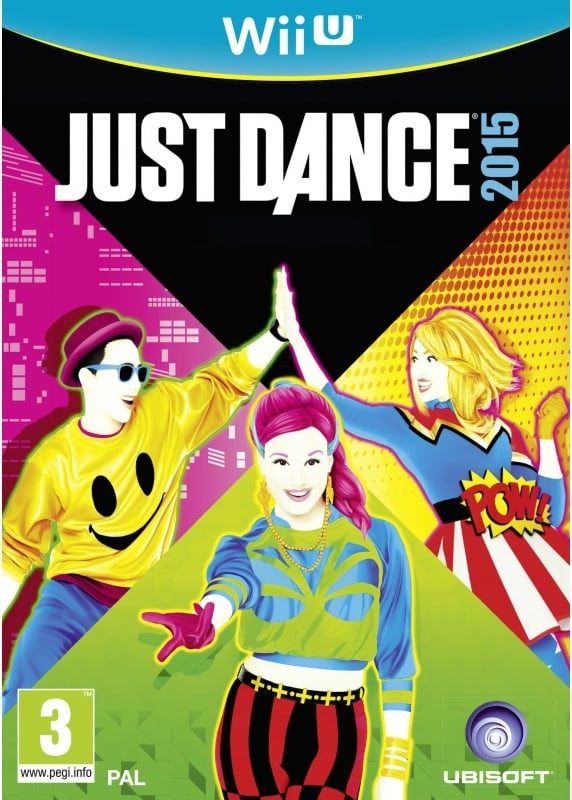
The game just dance conveys it's media text by talking to you as the voice of god telling you to do things. However, the game the last of us; uses second person, letting you do certain things and then things happen.

Semiotics:

Just dance uses it's semiotics to show how well you're doing in the game (dance) for example, i would use "Great!" or "Poor". The last of us uses a health bar to make the player sek out a way of regenerating their health.

Genre:

The genre of just dance is a dancing simulator/party game. And, the genre of the last of us is a survival/action/adventure/horror.

Content:

Just dance's content is more colourful fast paced and simple. In juxtaposition to this, the last of us is a dim, slow paced more difficult style of play.

Construction:

Just dance was built to be a family friendly party game, it uses it's bright colours and fast paced game-play to achieve that. The last of us however, was designed to be a more serious and story driven game, it uses it's dark lighting and slow paced game-play to do that.

Codes and Conventions:  

In the game just dance codes and conventions are used to convey how you should be moving your body to correctly dance. The last of us uses it's codes and conventions with the use of objects such as rusty cars and derelict buildings and cities, things stereotypical of a post-apocalyptic game.

Modes of address:

Just dance keeps everything family friendly and easy to use to ensure anyone can use it. The last of us does the opposite. It uses it's story and style of play to attract more serious male gamers who play the game for the story.

Target demographic:

The target demographic for just dance is pretty much anyone, whether you're 1 or 100, male or female. The last of us though, has a very  specific audience which it appeals to. I would say it would be 15-30 year old males.

Just Dance and the Last Of Us comparison:

                                                                                                                                                                           
Just Dance:

Genre: Interactive dancing simulator
Content: It’s styled to be very eye catching and friendly on the eyes for extensive use not causing discomfort.
Construction: It’s constructed in a way so that it’s simple and easy to follow, use and understand.
Narrative Conversions: Just dance contains no story or narrative. However, this is typical for this genre and style of game.
Common Codes: It has an animated avatar and bright, vibrant colours. Quick, simple and fast paced gameplay, but this makes it repetitive.

When profiling this game, it would be wise to target the audience around younger gamers and a family household. Advertising this game as a “party” game or a “dancing simulator” would be a good idea.

The Last Of Us:

Genre: The game is an action/adventure 3rd person styled horror/thriller. Which, is designed to be linear and story driven.
Content: It’s a very dark and dimly lit game; to emphasize upon the mysterious and scary theme surrounding each stage.
Construction: The entire game is constructed to be a semi-free-roam style, although the game and it’s story are set in stone; the size and diversity of the levels you are faced with provide a sense of exploration that you think is necessary, and, in a way, it is.
Narrative Conventions: The story is a post-apocalyptic survival horror. This story, in particular, is about finding a cure and ensuring it’s success with plot twists along the way. The gameplay isn’t too typical for its genre. It manages to pull of the 3rd person perspective horror without ruining the expectance by giving you the advantage of seeing enemy’s well before they see you.
Common Codes: It features a variety of weapons; although not extensive it’s still large enough to satisfy you thought the games story. Weapons range from close range melee to long range and medium range guns. Ammo isn’t too difficult to come by but it’s sporadic enough to make you think twice before pulling that trigger.
To profile this game you would have to target males between the ages of 15-30, the deep story and dark lighting would appeal to a more “hard-core gamer” audience.


Task 3 - Presentation of research results

Quantitative Research:

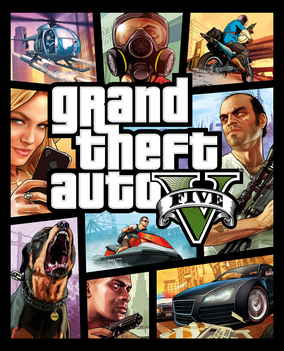
After asking students around college. It became clear that the majority of people I asked where males who where between the age of 17 and 18 who class themselves as casual gamer's. And, are obviously in education and live in the North west of England. Most of them had played GTA V and they had neutral feelings towards the game.


Qualitative Research:


After my qualitative research had been fully carried out, it became apparent that most people liked the style of the game but had different opinions what they liked most about the game. However, when it came to their favorite character.  There was a clear winner. Trevor. Mostly because he is a funny character and entertaining to follow. What the people want to improve/change about the game everyone agreed. They all wanted a better story-line.

Task 2 - Applying research techniques


Quantitative GTA5 Survey:

We gathered in groups of four and talked about how we should ask questions to determine the target audience for the game; GTA 5. We then designed and published our survey on the online site, Survey Monkey.

Bellow are screen caps of the actual survey, with all the questions: 


Unfortunately, I got zero replies. But, from the other members of my team, we managed to come to the conclusion that most people had played GTA 5 and enjoyed it so much they bought a copy. Another thing we discovered, unsurprisingly, was that most people who play it are underage males who's first language is English and were from the North West of England. That spend over ten hours a week playing games, with the majority playing the Xbox 360 console. they all would recommend the game to friend. 


Qualitative Research: 


This thought me that, the majority of people like the game GTA 5 because of it's diversity and flexibility on it's game-play. The freedom to do whatever you want and can think of, sandbox style, seems to be a very popular concept among hardcore console gamer's. 

Task 1 - Research techniques

Quantitative research:

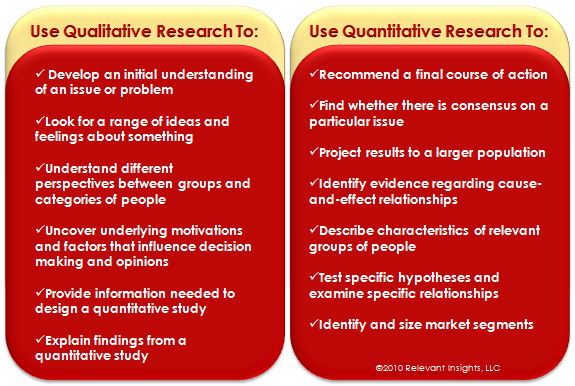
In sociology, quantitative research refers to the systematic empirical investigation of social phenomena via statistical, mathematical or numerical data or computational techniques. The objective of quantitative research is to develop and employ mathematical models, theories and/or hypotheses pertaining to phenomena


This could mean asking people in public closed questions on a particular topic, for example: "Do you like gaming on tablets?" there are only two possible answers for this question, yes or no. making the evidence you collect easier to decide on a target audience for your game. this would be accomplished by using surveys and questionnaires.

ESA: Women make up almost half of all gamers

New report from industry group also finds adult women a more significant portion of game-playing population than boys 17 and under.


Qualitative research:


Qualitative Research is primarily exploratory research. It is used to gain an understanding of underlying reasons, opinions, and motivations. It provides insights into the problem or helps to develop ideas or hypotheses for potential quantitative research.


This would entail gathering data on specific topics using open ended questions, such as: "Why do you like prefer gaming a tablet over a console?". In contract to quantitative research the range and variety of answer will be more explanatory and helpful. You can easily collect, analyse and use your data to help you create a product that is designed to fit your target audiences preferences.      


Persona 3: FES manages to take one of last year's best RPGs and make it even better, trumping the original with loads of gameplay and fantastic value.  For newcomers, a mere $30 buys them easily over 100 hours of impossibly engaging role-playing action, giving them an incredible price on what is probably the best RPGs for the PlayStation 2. And fans of Persona 3 will definitely want to pick this up to witness the satisfying conclusion to the story, as well as all of the stellar new content. Do not miss this game.

Audience Profiling:

Audience Profiling is finding out about the profile of your audience before hand so that you can put across your message to the right people in the most effective way to produce the best result. It might include details like age, sex, educational qualification, work experience, financial background, field of work, interests, mood, orientation, bias, food habits, religious background, physique, health condition etc.
If you wanted to create a game which mainly included random violence then you would to collect both types of data above and consider who your target audience is. Obviously a lot more males would be interested in this game so you would have to focus all of your marketing techniques to attract to attention and interest of males.